
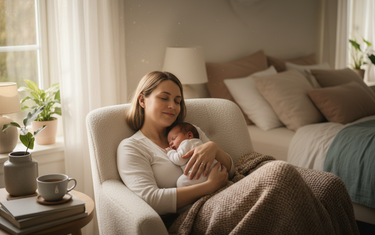
The first days and weeks after birth are a very special time. Everything is new, emotional, and often more intense than one might have imagined beforehand. This is precisely why it's good not to underestimate the postpartum period and to prepare for it a little during pregnancy.
Because the postpartum period is not about getting back to normal as quickly as possible. It's about arriving, healing, getting to know your baby, and taking good care of yourself.
In this article, you'll find a practical postpartum checklist with everything that can truly make the first period after birth easier for you.
What exactly is the postpartum period?
The postpartum period refers to the first weeks after birth, during which your body slowly recovers hormonally and physically. At the same time, the first intensive bonding phase with your baby begins.
This time is often wonderful, but also demanding. Fatigue, insecurity, physical discomfort, and many new feelings are completely normal. It is all the more important to take as much pressure off yourself as possible and to prepare your environment well.
Why preparation during the postpartum period is so important
Many expectant mothers prepare for childbirth very carefully, but only think about the time afterwards quite late. Yet, it is often precisely the postpartum period that determines how relaxed or overwhelming the first weeks are experienced.
If you organize a few things beforehand, you can save yourself a lot of stress later. It's not about being perfectly prepared, but about creating peace, support, and simple routines for yourself.
Postpartum Checklist: What you should organize beforehand
1. Prepare food
During the postpartum period, time and energy for cooking are often lacking. It is all the more helpful if you plan a few meals beforehand.
Helpful things include, for example:
- pre-cooked meals in the freezer
- soups, stews, pasta sauces
- healthy snacks
- muesli, nuts, dates, crackers
- easily accessible drinks
- delivery options for stressful days
Especially if you are breastfeeding, you will often be hungry and thirsty. It is therefore invaluable if food is quickly available.
2. Set up a cozy postpartum nest
Set up a place where you can comfortably breastfeed, cuddle, and rest with your baby.
Practical items include:
- water bottle
- snacks
- phone charger
- nursing pillow
- muslin cloths
- blanket
- lip balm
- tissues
- remote control or book
- night light
This way you don't have to constantly get up or search for things.
3. Prepare hygiene and care products
After birth, your body needs time. It helps a lot if you already have everything important at home.
Useful items are:
- large pads
- comfortable underwear
- soft clothing
- nipple cream
- nursing pads
- perineal bottle or gentle care products
- heating pad
- painkillers only on medical advice
- possibly cooling pads
Depending on the birth experience, different things can be helpful. Comfort is more important than anything else during this time.
4. Organize support
The postpartum period doesn't mean you have to do everything alone. On the contrary: support is not a weakness, but often exactly what helps you settle into your new role well.
Consider beforehand:
- Who can grocery shop?
- Who can bring food over?
- Who can help with housework?
- Who can briefly watch the baby if you want to shower or sleep?
- Who do you even want to see during the postpartum period?
It is completely okay to consciously limit visitors and only have people around you who genuinely do you good.
What you should have ready for your baby
You don't need a huge amount of equipment for your baby either, but a few things make everyday life a lot easier.
Practical for the postpartum period:
- bodysuits and rompers
- muslin cloths
- diapers
- wet wipes or washcloths
- changing mat
- baby blanket
- sleeping place
- baby nest only with safe use
- some burp cloths
- baby bath towel
- weather-appropriate clothing
Above all, it is important that everything is easily accessible and uncomplicated.
Breastfeeding, bottles, and feeding: prepare in a relaxed way
Whether you breastfeed, pump, supplement, or bottle-feed: in the postpartum period, it should above all be practical.
Helpful items can be:
- nursing bras or tops
- nursing pads
- nursing pillow
- nipple cream
- water bottle at the nursing station
- if necessary, bottles and basic equipment
- phone number of a lactation consultant or midwife
You don't have to know every step perfectly in advance. It's enough if you know who to contact with questions.
What's really important for the household
During the postpartum period, housework can take a back seat. Nevertheless, it can help to sort out a few basics beforehand.
These include:
- enough laundry for you and the baby
- clean bedding
- stock of toilet paper and hygiene products
- simple staple foods
- a tidy changing station
- a place for dirty laundry near the baby
Less chaos often automatically means more peace of mind.
What you need emotionally
Not only your body, but also your heart needs time during the postpartum period. Many women experience strong emotions during this phase: love, overwhelm, gratitude, tears, exhaustion, insecurity.
All of this can be present at the same time.
What can help:
- consciously lower expectations
- accept help
- talk openly with your partner
- don't constantly compare yourself
- consciously create small oases of calm for yourself
- tell yourself: it doesn't have to be perfect
You don't have to be productive during the postpartum period. You are allowed to simply be.
Postpartum Checklist at a Glance
For you
- large pads
- comfortable underwear
- soft clothing
- nipple cream
- nursing pads
- snacks
- water bottle
- heating pad
- care products
- charger
For your baby
- bodysuits
- rompers
- diapers
- muslin cloths
- burp cloths
- blanket
- changing supplies
- sleeping place
For everyday life
- prepare food
- organize help
- plan shopping
- set visiting rules
- have important contacts readily available
Conclusion
The postpartum period is not a time when everything has to be perfect. It is a sensitive, valuable, and often very intense phase in which you primarily need one thing: peace, support, and kindness towards yourself.
With a little preparation, you can significantly ease these first weeks and create more space for what really matters: healing, bonding, and a gentle arrival as a mother.